
Periodic Inspections: Safety and Efficiency in Fleet Management
Discover how periodic vehicle inspections can increase road safety, optimise costs, and extend the lifespan of fleet vehicles. See best practices adapted to the Portuguese reality.
Table of Contents
- Introduction
- The importance of periodic inspections
- Checklist: what to inspect during periodic maintenance
- Technology and Fleet Management
- Conclusion
1. Introduction
Periodic inspections are fundamental to ensuring road safety and efficient fleet management. In 2024, Portugal recorded 134,914 accidents and 453 deaths on the roads, figures that reinforce the importance of adopting effective practices to reduce risks and improve operational performance.
More than a preventive measure, regular inspections represent a strategic investment that protects drivers, passengers, and goods, whilst reducing unexpected repair costs and extending vehicle longevity.
In this article, we will explore how periodic inspections can transform your fleet management, from implementing a practical checklist to using technology to optimise processes.
The importance of periodic inspections
Periodic vehicle inspections go far beyond simple preventive maintenance — they are an essential pillar for the efficient and safe operation of any fleet, especially before long-distance journeys. This process allows the identification of technical problems that may compromise vehicle performance and road safety. The benefits are clear and significant:
- Risk reduction: Early detection of technical faults minimises the likelihood of breakdowns and accidents, protecting drivers, passengers, and cargo.
- Greater operational efficiency: Preventing unexpected stoppages ensures fleet operations stay on schedule, reducing delays and costs associated with unforeseen events.
- Extended vehicle lifespan: By addressing minor problems at the right time, more complex and costly repairs are avoided in the future, ensuring a better return on investment.
Periodic inspections are not just a responsibility, but a strategic ally for any company that values safety, efficiency, and sustainability in its daily operations.
Checklist: what to inspect during periodic maintenance
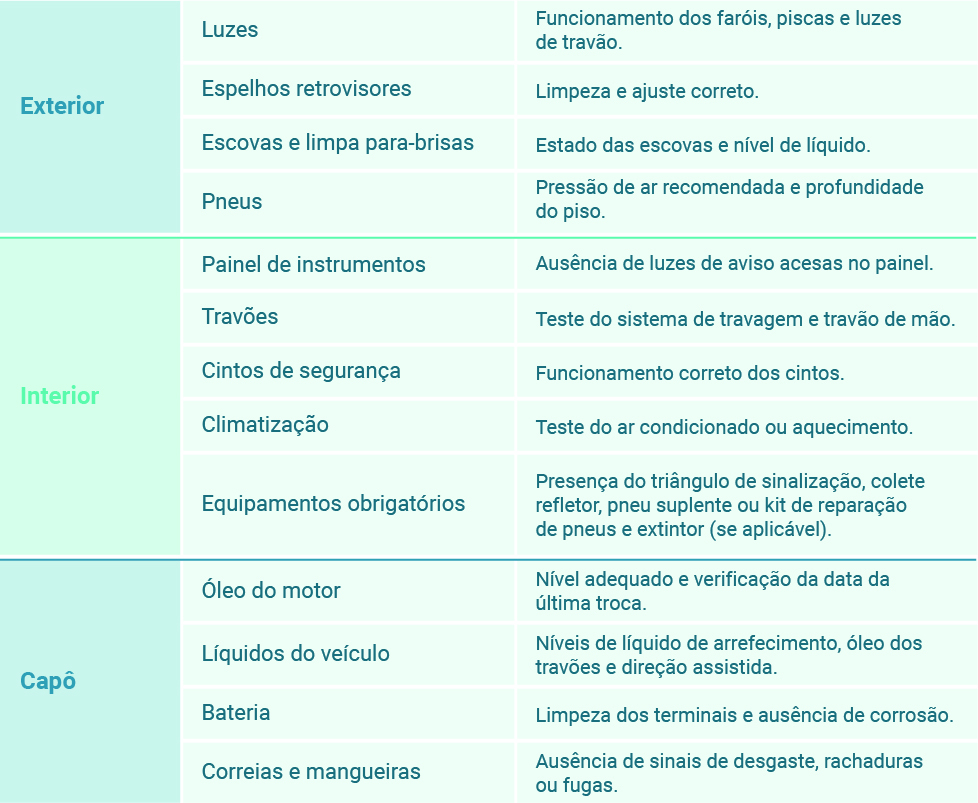
We have prepared a practical checklist with the main items to be inspected. The variable climate and road conditions in the country, such as wear from uneven surfaces or the influence of humidity in certain regions, can have a significant impact on vehicle performance and safety. Ensuring proper maintenance, considering these specificities, is essential to prevent problems and ensure safer and more efficient journeys.
Technology and Fleet Management
In today's market, there are various fleet management software solutions that help companies optimise their operations. These technological solutions allow monitoring, controlling, and improving fleet performance in an integrated and efficient manner.
With the use of these technologies, drivers and managers can:
- Record inspections before and after each journey, ensuring that all necessary procedures are carried out efficiently.
- Identify and report recurring problems, enabling swift action and preventing more serious breakdowns.
- Optimise vehicle availability, reducing downtime and increasing fleet productivity.
In the Portuguese context, compliance with traffic and safety regulations is indispensable to avoid fines and ensure a smooth, lawful operation. A well-managed fleet not only guarantees operational efficiency but also reinforces the safety and sustainability of the business.
Conclusion
Periodic inspections go beyond a simple safety measure; they are an essential strategy for optimising costs, avoiding unexpected failures, and ensuring fleet operations run without interruption. Companies that incorporate technological fleet management tools are one step ahead, not only in monitoring vehicle conditions and performance but also in enhancing the safety and efficiency of every journey. With proactive and integrated management, it is possible to protect both company assets and road safety, resulting in a more agile, sustainable, and profitable operation.